Back to BlogPrograms

How to run the Rite of Passage program

2026-08-1112 min read

Written by Hamza J

How to run the Rite of Passage program
Contents

Based on Pavel Tsatsouline's Rite of Passage from Enter the Kettlebell, with some minor adaptations.

A kettlebell strength program built around one lift: the one-arm clean & press. Three pressing days per week (heavy, medium, light) using ladders that grow from 1-2-3 up to 1-2-3-4-5 across 5 sets, followed by dice-rolled minutes of swings or snatches. Pull-ups are woven between the press ladders. You run it bell by bell until you graduate.

Who Is This Program For?

The Rite of Passage is for lifters who want serious pressing strength and conditioning from a single kettlebell. It takes one main lift, wraps it in a heavy/medium/light weekly wave, and repeats until you press a bell most people cannot budge.

The program focuses on:

  • One main lift: the one-arm kettlebell clean & press, trained three days per week
  • Ladders: high quality volume without grinding, every rep crisp and powerful
  • Waved intensity: heavy, medium, and light days so you only go hard once per week
  • Conditioning built in: swings and snatches after every pressing session

If you want a program with a clear finish line, the graduation standards below, this is one of the most respected kettlebell programs ever written.

Program Structure

The Exercises

ExerciseRole
One-Arm Kettlebell Clean & PressMain lift, trained in ladders
Pull-upPaired with the press ladders
One-Arm SwingConditioning after presses (medium and heavy days)
Kettlebell SnatchConditioning after presses (light day)

Understanding Ladders

A ladder is a series of sets with rising reps. A 3-rung ladder (1, 2, 3) looks like this:

  1. 1 clean & press left, 1 clean & press right, short rest
  2. 2 clean & presses left, 2 right, short rest
  3. 3 clean & presses left, 3 right, then a longer rest before the next ladder

Every rep is a full clean followed by a press: re-clean the bell before each press. "5 ladders of (1, 2, 3, 4, 5)" means you run a 5-rung ladder five times, which is 75 presses per arm.

The Three Pressing Days

DayLaddersRungsBallistic work after
Heavy5Full ladder, up to (1, 2, 3, 4, 5)Swings, hard effort (85-90%)
Medium5One rung less than heavy daySwings, moderate effort (~75%)
Light5Two rungs less than heavy daySnatches, easy effort (50-60%)

So when your heavy day is 5×(1, 2, 3), the medium day is 5×(1, 2) and the light day is 5×(1). When your heavy day reaches 5×(1, 2, 3, 4, 5), the medium day is 5×(1, 2, 3, 4) and the light day is 5×(1, 2, 3).

Pull-ups

Pair the presses with pull-ups: after each rung of presses, perform the same number of pull-ups (1 pull-up after the 1s, 2 after the 2s, and so on). If you do not have a pull-up bar, substitute one-arm rows with the same ladder scheme.

Swings and Snatches: Roll the Dice

After the press ladders, roll a pair of dice. The total (2 to 12) is how many minutes of ballistic work you do:

  • Light day: snatches, easy pace
  • Medium day: swings, moderate pace
  • Heavy day: swings, hard pace, near all-out

The randomness is the point: some days are short, some are long, and you do not get to choose.

Weekly Schedule

The book's example week:

DaySession
MondayLight: presses + snatches
TuesdayVariety day (optional, easy)
WednesdayMedium: presses + swings
ThursdayVariety day (optional, easy)
FridayRest
SaturdayHeavy: presses + swings
SundayRest

Rest days bookend the heavy day. Variety days are optional and easy: anything you want as long as it is not strenuous enough to affect your pressing.

Progression: How the Ladders Grow

Progress by adding ladders first, then rungs, always on the heavy day (medium and light days follow automatically at one and two rungs less):

StageHeavy Day
13 ladders of (1, 2, 3)
24 ladders of (1, 2, 3)
35 ladders of (1, 2, 3)
45 ladders of (1, 2, 3, 4)
55 ladders of (1, 2, 3, 4, 5)

Move to the next stage when you complete the current one with every rep crisp and strong. When you own 5 ladders of (1, 2, 3, 4, 5) on the heavy day, move up one bell size and restart the ladder progression at 3 ladders of (1, 2, 3). Standard kettlebell jumps are 8 kg (18 lbs) for men, for example 16 kg to 24 kg to 32 kg, and 4 kg (9 lbs) for women. Own each stage before chasing the next: 8-12 sessions at full volume with a bell is a good benchmark before jumping up.

Graduation Standards

The book sets two graduation tests, written for men:

  1. Press: clean & press a kettlebell close to half your bodyweight
  2. Snatch: 200 snatches in 10 minutes with a 24 kg (53 lbs) bell, the Secret Service Snatch Test

Women run the identical program with scaled bells. The book frames the women's milestones in bell sizes: pressing a 12 kg (26 lbs) bell already puts a woman head and shoulders above most, and a 16 kg (35 lbs) press is a serious standard.

Get Your Form Right First

Everything below assumes your form is already solid. Finding your working weight, adding weight, chasing reps, all of it only works if you can perform the lift correctly. While your form is not locked in, that is your only job. Make good form the goal of every set, not the weight on the bar. Drilling the movement with an empty bar beats loading plates onto a lift you cannot control yet.

To learn, don't hesitate to search Google and YouTube (there is a lot of good free material) and record yourself from the side to compare against a proper demonstration. In general, good form means a full controlled range of motion, a braced neutral spine, no bouncing or momentum, a consistent setup every rep, and ending the set when technique breaks down rather than grinding sloppy reps.

Finding Your Starting Bell Size

Use a bell you can strict press 5-8 times with your weaker arm. Typical starting sizes:

LifterStarting Bell
Average man16 kg (35 lbs)
Strong man24 kg (53 lbs)
Average woman8 kg (18 lbs)
Strong woman12 kg (26 lbs)

If in doubt, start lighter. The ladder volume adds up fast, and the program is designed to make a "too easy" bell heavy through volume before you ever need to change it.

Warming Up

Enter the Kettlebell prescribes a simple three-drill warmup, done for about 3 rounds before each session:

  1. Face-the-wall squat ×5: squat facing a wall, toes close to it, forcing an upright chest and proper hip movement
  2. Halo ×5 per direction: circle the bell slowly around your head, both directions
  3. Pump ×5: flow between an upward dog and downward dog position to open the hips and shoulders

Keep it short. The first ladder rungs (the 1s and 2s) also act as a ramp into the session because the ladder starts light on volume.

Rest Times

SituationRest
Between rungsShort, enough to feel fresh (the pull-ups fill part of it)
Between laddersGenerous: 2-5 minutes
Before the ballistic workA few minutes, enough to swing or snatch with power

This is a strength program. Every clean & press should be crisp and powerful, so rest as much as you need to keep it that way. Rushing ladders defeats their purpose.

When You Stall

  • Missed a rung on the heavy day: stay at the current stage. Repeat it until all ladders are completed cleanly before adding a ladder or a rung.
  • Stuck for several weeks: drop back one stage (one ladder, or one rung) and rebuild. The wave structure means you only truly strain once a week, so most stalls come from pushing the medium and light days too hard. Keep them honest: one and two rungs below heavy.
  • New bell feels impossible: that is normal, the jump is big. Start at 3 ladders of (1, 2, 3) and let the volume build you up. If you have access to in-between bell sizes (4 kg jumps), use them.
  • Recovery slipping: cut the variety days first, they are optional. Sleep and food fuel the presses.

Program Duration

The Rite of Passage is open-ended and goal-based. Each bell takes weeks to months to climb through the ladder stages, and most lifters spend several months to a few years going from their starting bell to the graduation standards. You are done when you press close to half your bodyweight and pass the snatch test, not when a calendar says so.

Run Rite of Passage on Virtus Athlete

Virtus Athlete fully integrates the Rite of Passage, handling the heavy/medium/light ladder scheme, the ladder and rung progression, the paired pull-ups, and the dice roll for swing and snatch minutes. Just enter your starting bell and start pressing.

Free on iOS and Android.

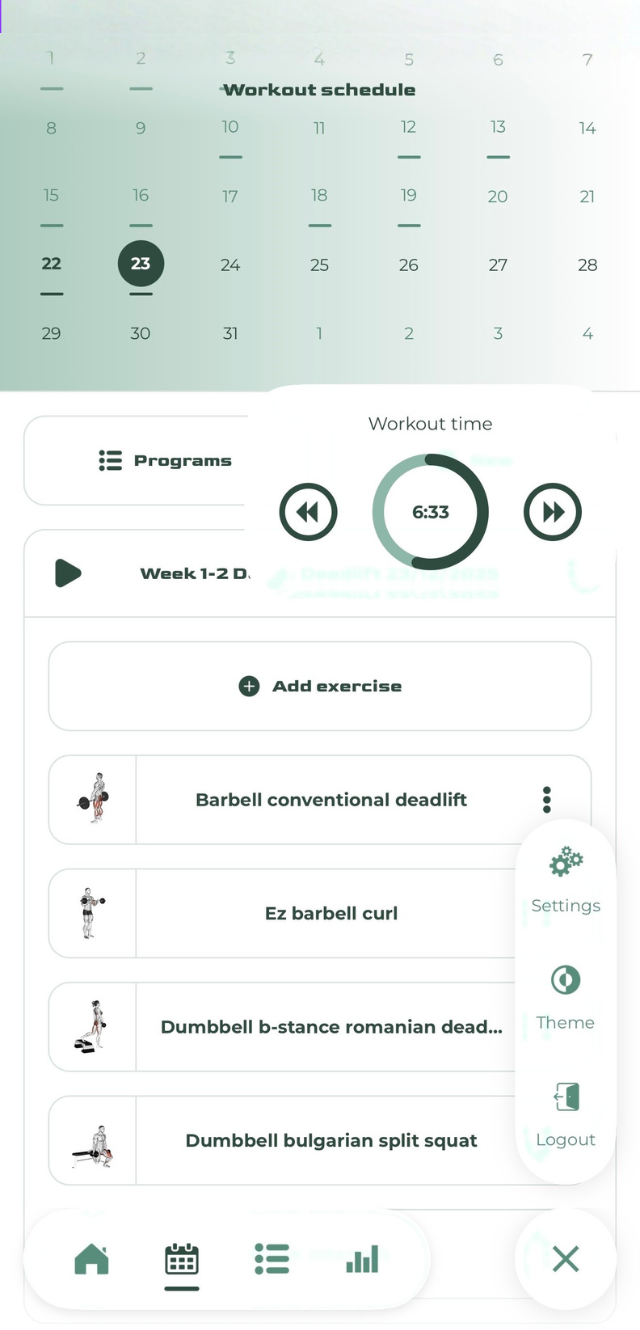
Virtus Athlete home screen with the week's scheduled workouts and progress summary

Frequently Asked Questions (FAQ)

How long does one full run take?
One ladder progression on a single bell (from 3 ladders of 1-2-3 to 5 ladders of 1-2-3-4-5) typically takes a few months at 3 pressing sessions per week. The full journey to the graduation standards usually spans multiple bells and is measured in months to years.
What if I don't have a pull-up bar?
Substitute one-arm rows using the same ladder rep scheme. You lose some pulling specificity but keep the push/pull balance.
Why snatches only on the light day?
The snatch is the most technical and demanding ballistic, so it gets the day when your presses are easiest and you are freshest for quality practice. The medium and heavy days use swings.
Do I have to roll dice?
The dice keep you honest by removing the choice of how long to work. If you prefer, use any random number generator that gives you 2 to 12 minutes.
Can women run this program?
Yes, identically, with scaled bell sizes: typically starting at 8-12 kg (18-26 lbs) and progressing with 4 kg (9 lbs) jumps.
What do I do on variety days?
Anything easy that does not affect your pressing: mobility, light swings, easy squats, walking. They are optional, and the first thing to cut when recovery is tight.
What happens after I graduate?
You have a half-bodyweight press and a passed snatch test. From there, any advanced kettlebell or barbell program is open to you, or you can chase a bigger press with the same ladder structure.

Related Articles

Track This Program

Build unlimited programs, log every set, and track your progress over time. Free on iOS & Android.