Back to BlogPrograms

How to run the Convict Conditioning program

2026-08-1115 min read

Written by Hamza J

How to run the Convict Conditioning program
Contents

Based on Paul Wade's Convict Conditioning, with some minor adaptations.

A progressive calisthenics system built on six movements, the "Big Six", each with a ten-step progression chain running from rehab-level variations to elite master steps. You earn each step by hitting its progression standard, and you assemble the chains into simple weekly templates: New Blood, Good Behavior, and Veterano.

Who Is This Program For?

Convict Conditioning is for anyone who wants to build serious strength with bodyweight only, over years, with almost no equipment.

The program focuses on:

  • Patience: ten steps per movement, and you master every one before moving on
  • Joint health: the first steps of each chain are gentle enough to double as rehab work
  • Minimal equipment: a floor, a wall, a pull-up bar, and a sturdy base cover the whole system
  • Mastery: the end goals are the one-arm pushup, one-arm pullup, pistol squat, hanging straight leg raise, stand-to-stand bridge, and one-arm handstand pushup

If you like the idea of a long, structured climb where every workout has a clear target, this is it.

Program Structure

The Big Six

Movement ChainMaster Step (Step 10)Main Muscles Worked
PushupsOne-Arm PushupsChest, front delts, triceps
SquatsOne-Leg SquatsQuads, glutes, hamstrings, calves
PullupsOne-Arm PullupsLats, upper back, biceps, forearms
Leg RaisesHanging Straight Leg RaisesAbs, obliques, hip flexors, grip
BridgesStand-to-Stand BridgesSpinal erectors, lower back, glutes, hamstrings
Handstand PushupsOne-Arm Handstand PushupsShoulders, triceps, traps, forearms

The Ten Steps and the Three Standards

Every chain has ten steps. Every step has three rep standards:

  • Beginner standard: your entry point when you start the step
  • Intermediate standard: the halfway milestone
  • Progression standard: the graduation requirement. Hit it with good form and you unlock the next step

For one-sided steps (uneven, half one-arm, one-arm, one-leg variations), the counts apply to each side.

Pushup Chain

StepExerciseBeginnerIntermediateProgression
1Wall Pushups1×102×253×50
2Incline Pushups1×102×203×40
3Kneeling Pushups1×102×153×30
4Half Pushups1×82×122×25
5Full Pushups1×52×102×20
6Close Pushups1×52×102×20
7Uneven Pushups1×52×102×20
8Half One-Arm Pushups1×52×102×20
9Lever Pushups1×52×102×20
10One-Arm Pushups1×52×101×100

Squat Chain

StepExerciseBeginnerIntermediateProgression
1Shoulderstand Squats1×102×253×50
2Jackknife Squats1×102×203×40
3Supported Squats1×102×153×30
4Half Squats1×82×352×50
5Full Squats1×52×102×30
6Close Squats1×52×102×20
7Uneven Squats1×52×102×20
8Half One-Leg Squats1×52×102×20
9Assisted One-Leg Squats1×52×102×20
10One-Leg Squats1×52×102×50

Pullup Chain

StepExerciseBeginnerIntermediateProgression
1Vertical Pulls1×102×203×40
2Horizontal Pulls1×102×203×30
3Jackknife Pulls1×102×153×20
4Half Pullups1×82×112×15
5Full Pullups1×52×82×10
6Close Pullups1×52×82×10
7Uneven Pullups1×52×72×9
8Half One-Arm Pullups1×42×62×8
9Assisted One-Arm Pullups1×32×52×7
10One-Arm Pullups1×12×32×6

Leg Raise Chain

StepExerciseBeginnerIntermediateProgression
1Knee Tucks1×102×253×40
2Flat Knee Raises1×102×203×35
3Flat Bent Leg Raises1×102×153×30
4Flat Frog Raises1×82×153×25
5Flat Straight Leg Raises1×52×102×20
6Hanging Knee Raises1×52×102×15
7Hanging Bent Leg Raises1×52×102×15
8Hanging Frog Raises1×52×102×15
9Partial Straight Leg Raises1×52×102×15
10Hanging Straight Leg Raises1×52×102×30

Bridge Chain

StepExerciseBeginnerIntermediateProgression
1Short Bridges1×102×253×50
2Straight Bridges1×102×203×40
3Angled Bridges1×82×153×30
4Head Bridges1×82×152×25
5Half Bridges1×82×152×20
6Full Bridges1×62×102×15
7Wall Walking Bridges (Down)1×32×62×10
8Wall Walking Bridges (Up)1×22×42×8
9Closing Bridges1×12×32×6
10Stand-to-Stand Bridges1×12×32×10-30

Handstand Pushup Chain

StepExerciseBeginnerIntermediateProgression
1Wall Headstands30s hold1 min hold2 min hold
2Crow Stands10s hold30s hold1 min hold
3Wall Handstands30s hold1 min hold2 min hold
4Half Handstand Pushups1×52×102×20
5Handstand Pushups1×52×102×15
6Close Handstand Pushups1×52×92×12
7Uneven Handstand Pushups1×52×82×10
8Half One-Arm Handstand Pushups1×42×62×8
9Lever Handstand Pushups1×32×42×6
10One-Arm Handstand Pushups1×12×21×5

The Training Templates

Convict Conditioning does not prescribe one fixed schedule. The book gives three main templates and you pick the one matching your level.

New Blood (Beginner, 2 days per week)

DayMovements
MondayPushups, Leg Raises
FridayPullups, Squats

Bridges and handstand pushups are deliberately held back. Work this template until you reach around Step 6 on the four basic chains, then graduate to Good Behavior.

Good Behavior (Intermediate, 3 days per week)

DayMovements
MondayPushups, Leg Raises
WednesdayPullups, Squats
FridayHandstand Pushups, Bridges

All Big Six chains, two per session. Wade calls this the best all-round template for building strength, and even advanced athletes return to it.

Veterano (Advanced, 6 days per week)

One Big Six movement per day, with more work sets per movement, and one full rest day. For example:

DayMovement
MondayPullups
TuesdayBridges
WednesdayHandstand Pushups
ThursdayLeg Raises
FridaySquats
SaturdayPushups
SundayRest

In every template, do 2 work sets per movement as the default. If you are not recovering, add extra rest days. The weekly structure is a guide, not a law.

Progression Rules

  • When you start a new step, begin at its beginner standard
  • Add reps workout to workout until you reach the progression standard with perfect form, then unlock the next step
  • Never train to failure. Wade's rule: "always leave at least one safe rep in the bank" and end the set when movement quality deteriorates
  • Cadence: 2 seconds down, 1 second pause in the hardest position, 2 seconds up. Rushed reps use momentum instead of muscle
  • Do not skip steps, even when an early step feels easy. The early steps condition joints and tendons for the later ones

Get Your Form Right First

Everything below assumes your form is already solid. Finding your working weight, adding weight, chasing reps, all of it only works if you can perform the lift correctly. While your form is not locked in, that is your only job. Make good form the goal of every set, not the weight on the bar. Drilling the movement with an empty bar beats loading plates onto a lift you cannot control yet.

To learn, don't hesitate to search Google and YouTube (there is a lot of good free material) and record yourself from the side to compare against a proper demonstration. In general, good form means a full controlled range of motion, a braced neutral spine, no bouncing or momentum, a consistent setup every rep, and ending the set when technique breaks down rather than grinding sloppy reps.

Finding Your Starting Step

Start every chain at Step 1, no matter how strong you are. This is the program's explicit philosophy:

  1. Begin at Step 1 with its beginner standard
  2. If a step is easy for you, you will fly through it in a session or two, no time lost
  3. Stop flying when you hit the step where the progression standard takes real work
  4. That is where your actual training begins

Strong athletes are tempted to jump straight to full pushups or pullups. Don't. The early steps build the connective tissue strength and technique that the one-arm steps will demand later.

Warming Up

Wade's warm-up uses the chain itself: before your work sets, perform the previous two steps of the chain at their recommended sets and reps as warm-up sets.

Example: if you are training one-arm pushups (Step 10), warm up with half one-arm pushups (Step 8) and lever pushups (Step 9) for 2×20 each, then do your work sets.

If you are still on the first steps of a chain, one lighter set of your current exercise is enough.

Rest Times

The book does not prescribe fixed rest periods. The rule that follows from the system is simple: rest long enough that the next set can be performed with full control at the 2-1-2 cadence.

SituationRest Period
Between warm-up setsAbout 1 minute
Between work setsAs long as you need for a fully controlled set
Between movementsA few minutes, until you feel fresh

Never rush a set to save time. Quality of movement is the entire currency of this program.

Plateaus

When you are stuck at a step:

  • Do not train to failure trying to break through. Grinding failed reps teaches bad form
  • Back off within the step: return to the intermediate standard and rebuild reps slowly
  • Use consolidation training: frequent, daily, low-rep, non-exhausting attempts at the sticking movement. It builds confidence and coordination, but has fast diminishing returns, so use it sparingly and only for short periods
  • Check recovery: sleep, food, and extra rest days fix more stalls than any technique tweak

Program Duration

Convict Conditioning is a multi-year system, not a 12-week block.

  • Each step typically takes weeks to months to reach its progression standard
  • There are 60 steps across the six chains
  • Long-term practitioners report that a first one-arm pushup alone can take years of consistent work

The timeline is the point. Every standard you hit is strength you keep.

Run Convict Conditioning on Virtus Athlete

Virtus Athlete fully integrates Convict Conditioning, tracking your step in every chain and the beginner, intermediate, and progression standards for you. Just pick your template and start climbing.

Free on iOS and Android.

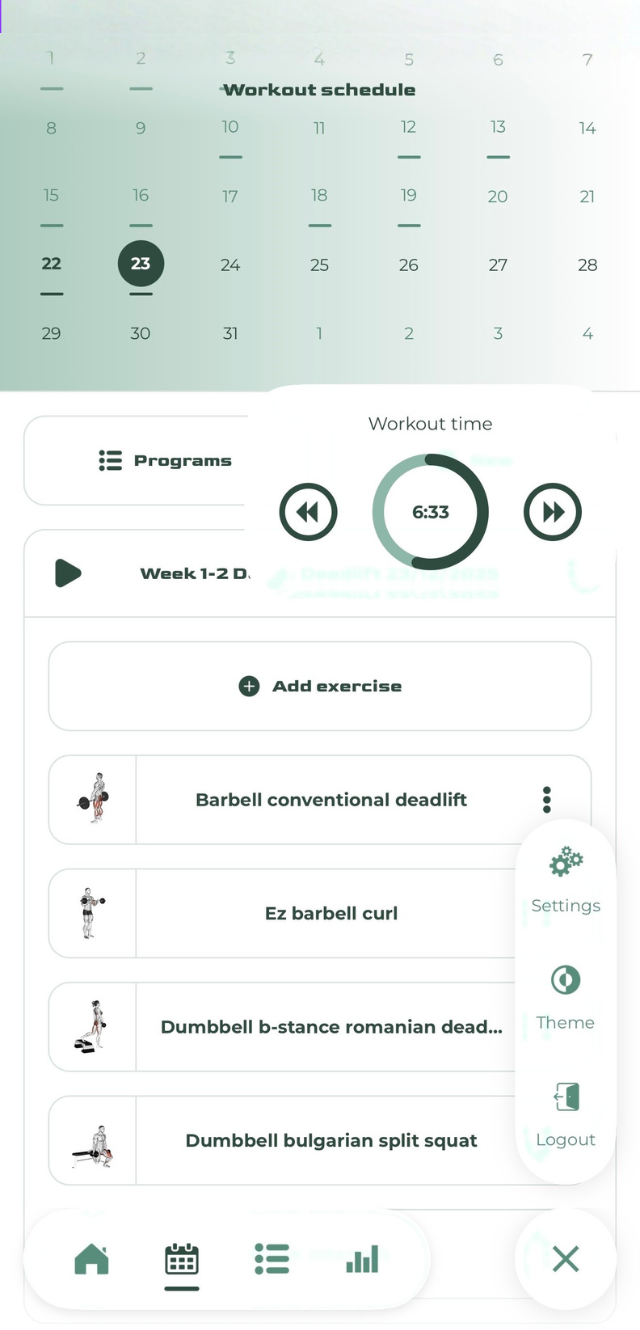
Virtus Athlete home screen with the week's scheduled workouts and progress summary

Frequently Asked Questions (FAQ)

How long does one full run take?
Years. With 60 steps across six chains and each step taking weeks to months to master, working from Step 1 to the master steps is a multi-year project. Most people spend their first months in New Blood, then years inside Good Behavior.
What equipment do I need?
A wall, a floor, a pull-up bar, and a sturdy raised base (a chair, bench, or table) for incline and jackknife work. A basketball or similar object is useful for the uneven variations.
Can I skip the easy steps?
No. The early steps condition your joints and tendons for the later ones, and the progression standards make sure you never build on a weak base. If a step is genuinely easy you will pass it in a session or two anyway.
Do the rep counts apply per side?
For one-sided exercises (uneven, half one-arm, one-arm, and one-leg variations), yes. Perform the listed sets and reps on each side.
Can I combine this with weight training?
The book is built around calisthenics only, and the templates use your full recovery budget. If you add lifting, cut volume somewhere, and do not let it compromise your step standards.
What happens if I miss a workout?
Pick up where you left off. The program has no fixed calendar, so a missed day just shifts the week. Add rest days freely whenever recovery is lagging.

Related Articles

Track This Program

Build unlimited programs, log every set, and track your progress over time. Free on iOS & Android.