The lifters with the best physiques you know are not the ones with the hardest workouts. They are the ones with the cleanest daily habits between workouts.
Training is 4 to 6 hours of your week. Everything else is 162 to 164 hours. The muscle you build comes from how you spend those 162 hours, not the 4 to 6. This guide covers the 8 non-gym habits that drive 80 percent of your physique results.
Sleep is when growth hormone spikes, muscle protein synthesis peaks, and the nervous system recovers from training. Train hard on 6 hours of sleep and most of the work is wasted. The lifters who look like they take steroids almost always sleep 8 hours a night, every night.
Get to bed at the same time. Keep the room dark and cold. Phone out of the room. See sleep and muscle growth for the deeper protocol.
Walking is the most underrated training tool there is. 8,000 to 12,000 steps a day burns 300 to 600 calories without touching recovery, improves insulin sensitivity, and reduces stress. It also makes a calorie deficit (or surplus management) far easier.
You do not need a treadmill. Park further. Take stairs. Walk a 15-minute loop after dinner. Steps stack invisibly and the body composition difference at the end of a year is enormous.
Hitting 1.6 to 2.2 grams of protein per kilogram of bodyweight daily is the second most important nutrition habit after total calories. The cheapest way to nail it is 30 to 50 grams of protein at every meal, every day. See the right macro split and how many meals to build muscle.
Skipping protein at breakfast and lunch, then eating one chicken breast at dinner, is the most common reason beginners undereat protein by 30 to 50 grams a day.
Even mild dehydration drops lifting performance by 3 to 7 percent. That is real weight off the bar, real reps left behind, real muscle not built. 3 to 4 liters of water a day for a lifter is the baseline. More if you sweat heavily or live somewhere hot.
See dehydration and lifting performance for what mild dehydration actually does to your sets.
Morning sunlight anchors your circadian rhythm, which controls when growth hormone releases and when sleep pressure builds. Lifters who get 10 to 30 minutes of direct outdoor daylight a day sleep better, recover faster, and have steadier energy. The effect is real and is free.
Get the daylight in the first 2 hours after waking if possible. Cloud cover does not matter much. Step outside.
Stress is not just a feeling. It is a hormonal state that suppresses muscle growth, raises cortisol, wrecks sleep, and shrinks recovery. Chronic stress will undo a good program faster than a bad program ever could.
Stress management is not a yoga retreat. It is daily tools: walking outside, talking to someone, limiting phone time, getting morning sunlight, sleeping enough. See stress and muscle growth for what cortisol does to your work.
Total inactivity is hard on recovery. Light movement on rest days, 20 to 30 minutes of walking, stretching, or easy mobility, increases blood flow to recovering tissue and helps you feel better the next training day.
Rest days are not sit-on-the-couch days. They are "no heavy lifting" days. Move enough to feel limber. The full body responds.
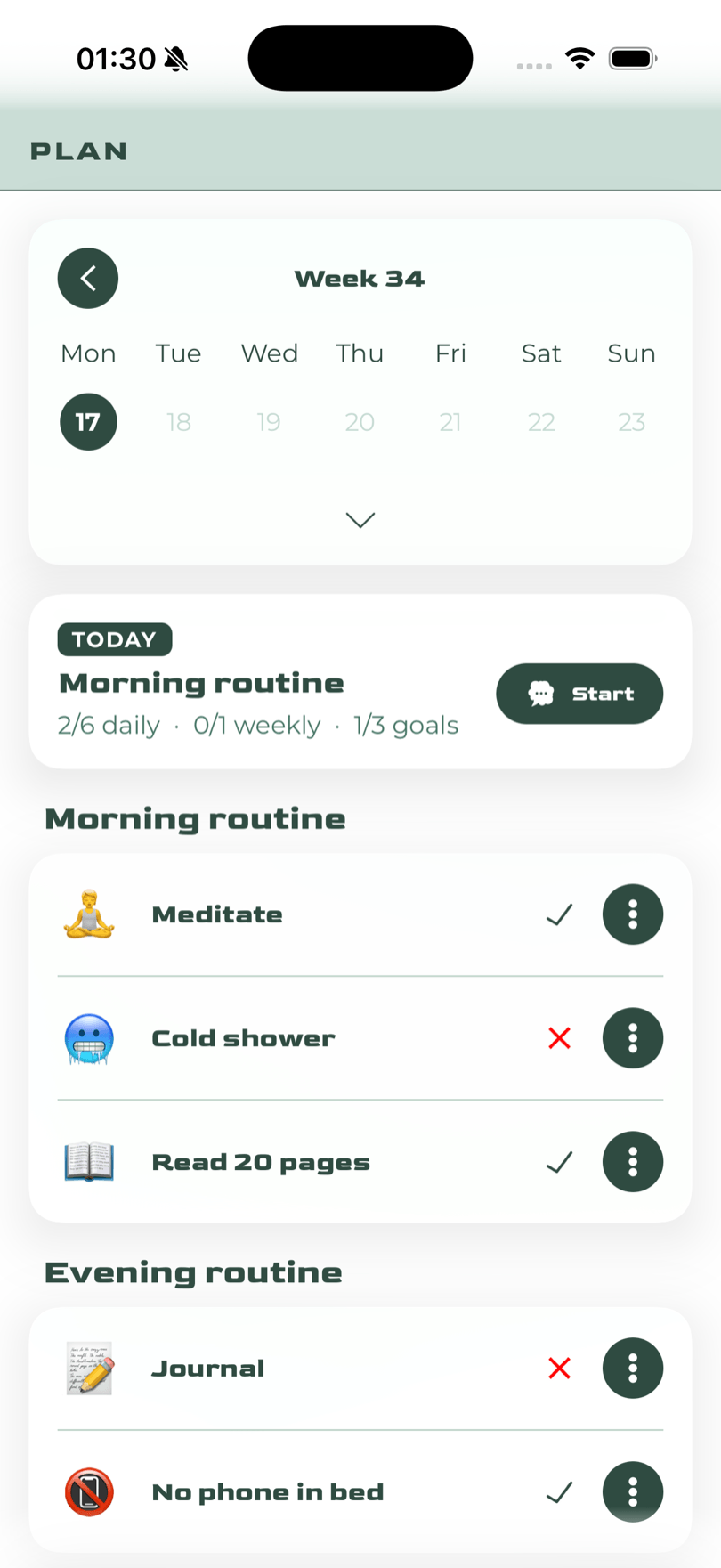
Tracking your workouts is the headline habit. The hidden habit is tracking everything you cannot see directly: sleep hours, daily steps, water intake, daily protein, and how you feel on a 1 to 10 scale. These metrics are the early warning system. When sleep drops, recovery drops 3 days later. When steps drop, body composition drifts 3 weeks later. Catching the signal in the data is faster than catching it in the mirror.
The lifters who track only their workouts see the trend after it has already happened. The lifters who track the lifestyle metrics see it before it does.
| Time | Habit |
|---|
| Wake | 10 minutes outside, water, daily protein target written down |
| Morning | Breakfast with 30 g protein |
| Mid-day | Walking break, water, lunch with 40 g protein |
| Late afternoon | Gym session (or off-day mobility) |
| Evening | Dinner with 40 g protein, family/social time, no work |
| Pre-bed | Phone out of room, lights low, in bed 8 hours before alarm |
None of this is dramatic. None of it costs money. All of it compounds.

 iOS
iOS Android