A training log is the most underrated tool in the gym.
Progressive overload requires knowing what you did last session so you can do more this session. Without that data, you are guessing. And research shows your guesses are wrong more often than you think.
Research shows memory accuracy for workout details drops below 40% after just 48 hours. You think you did four sets of eight at 80 kg, but it was actually three sets of seven at 75 kg. That difference matters.
If you cannot remember what you lifted last week, you cannot beat it this week. You end up repeating the same weights, the same reps, the same plateau. For months. Without a log, progressive overload becomes accidental rather than systematic.
The evidence is clear. Studies tracking intermediate lifters over 24 weeks found that those maintaining detailed logs achieved average strength gains of 47% on main lifts. The non-logging control group averaged 18%. Same training program. The only difference was whether they wrote it down.
| Group | Strength Gain |
|---|
| Logged every session | 47% |
| Trained without logging | 18% |
Athletes who logged workouts with detailed metrics (weight, sets, reps, RPE) also demonstrated 65% better adherence rates. Tracking creates accountability. When you see your numbers, you show up more consistently.
Every set. Every rep. The minimum viable training log captures four data points per exercise:
- Exercise name
- Weight used
- Sets and reps completed (not planned, completed)
- RPE or reps in reserve (how hard the set felt)
RPE (rate of perceived exertion) tells you whether the weight was challenging or coasting. A set at RPE 8 means you had about two reps left. This context is essential for deciding when to increase weight versus when to hold steady.
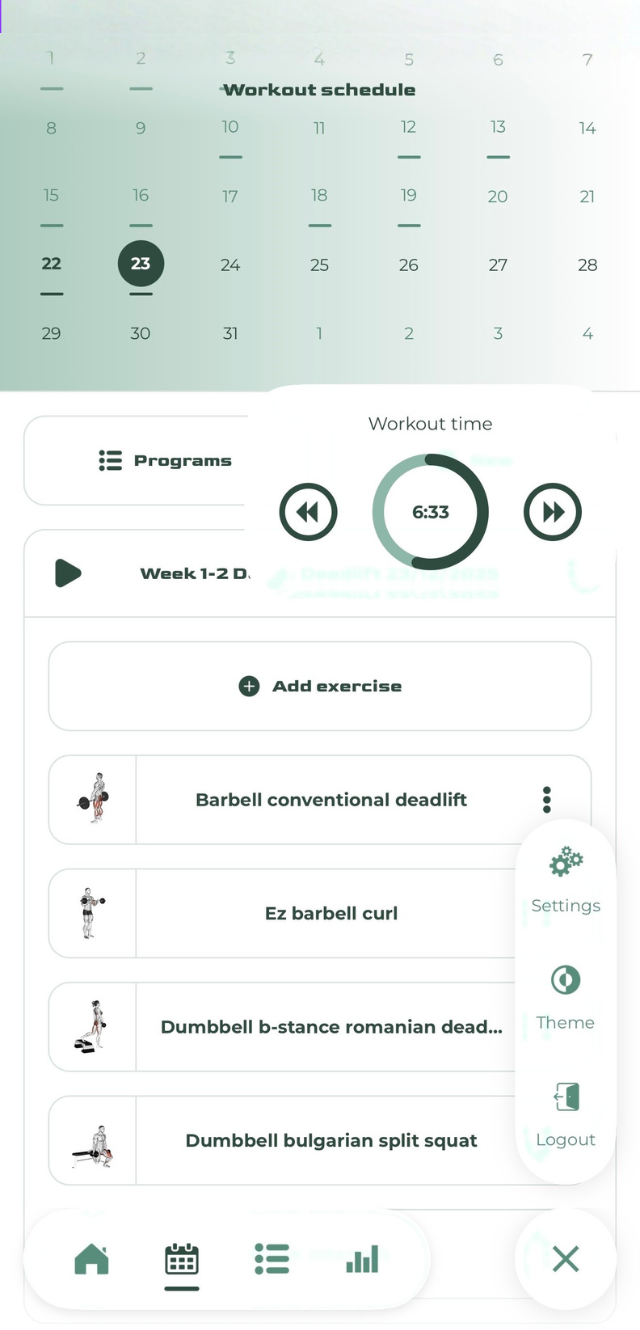
Together, these data points make progressive overload systematic. You know exactly what to beat next session. A notebook can hold all four; if you would rather have the calculations and history done for you, compare the best workout tracker apps in 2026.
Track Body Metrics Too
Training data alone is not enough. Body composition changes happen slowly and are invisible day to day. You need:
- Weekly body weight averages (daily weigh-ins, averaged per week)
- Monthly body measurements (waist, chest, arms, thighs)
- Monthly progress photos (same lighting, same pose)
Strength going up + waist stable = muscle gain. Even if the scale does not move. These metrics together tell a story that no single measurement can tell alone.
One workout log entry means nothing. Six months of data tells you exactly what works, what stalls, and what to change.
You can see:
- Which exercises drove the most progress
- When plateaus started (and what preceded them)
- Whether deloads improved the following block
- How bodyweight trends correlate with strength trends
- Whether training volume needs to go up or down
Trends replace guesswork. Decisions replace instinct. This is the difference between training randomly and training strategically.

 iOS
iOS Android