The lifter who trains 3 times a week for a year always beats the lifter who trains 5 times a week for 6 weeks. Showing up is the only variable that matters.
Most people who fail at the gym do not fail at the workouts. They fail between the workouts. They skip Monday because they are tired, skip Friday because they are busy, skip the next Monday because they already missed two and feel behind. Six weeks of perfect training followed by 6 weeks of no training gives you a 6-week training year. Six weeks of any training, repeated for 52 weeks, gives you 52 weeks of growth.
Strength and muscle are compound assets. Each productive session adds a tiny percentage to the previous total. Skip a session and you do not lose ground, but you also do not add to the pile. Skip a month and you slowly shrink the pile.
A beginner who lifts 3 times a week and never misses 2 weeks in a row in their first year typically gains 8 to 12 kilograms of new muscle and doubles their compound lifts. A beginner who trains 5 times a week but takes 3 month-long breaks in the same year gains a fraction of that, sometimes less than 2 kg. The trainer with more intensity loses to the trainer with more consistency. See how fast you can build muscle for the realistic numbers.
High-intensity training burns through recovery capacity fast. Two great workouts mean nothing if the third one never happens because you are too sore, too tired, or too injured to show up. The lifters who post the highest peak workouts on social media are not always the lifters with the most progress. Progress requires repetition.
Intensity without consistency also wrecks your nervous system. The first 6 weeks of any aggressive program will feel great. Week 7 to 10 is when fatigue accumulates and progress stalls, and skipping sessions starts feeling necessary. Without a structured deload, the wheels come off.
Consistency is not perfection. Consistency is showing up enough that the gym becomes the default, not the decision. A consistent lifter has bad sessions, bad weeks, even bad months, but the calendar never goes blank for more than a week or two.
A useful target: 80 percent attendance on your weekly plan, every month, for a year. If you planned 4 sessions a week, that means missing no more than 6 sessions per month, ever. That is the bar. Hit it and you will be in the top 20 percent of lifters within a year just from time on the bar.
Pick the program you can sustain, not the program you wish you could. A 3-day full-body routine you finish every week beats a 5-day split you finish twice a month. Consistency is the variable. Pick for the variable.
Schedule the workouts. Treat them as calendar appointments. A vague "I will go after work" is a workout you will skip. A 6:30 PM Monday/Wednesday/Friday slot blocked in your calendar is a workout you will attend.
Make the gym easier than not going. Pack the bag the night before. Pick a gym on the way home from work. Reduce the friction between "I should go" and standing in front of the rack.
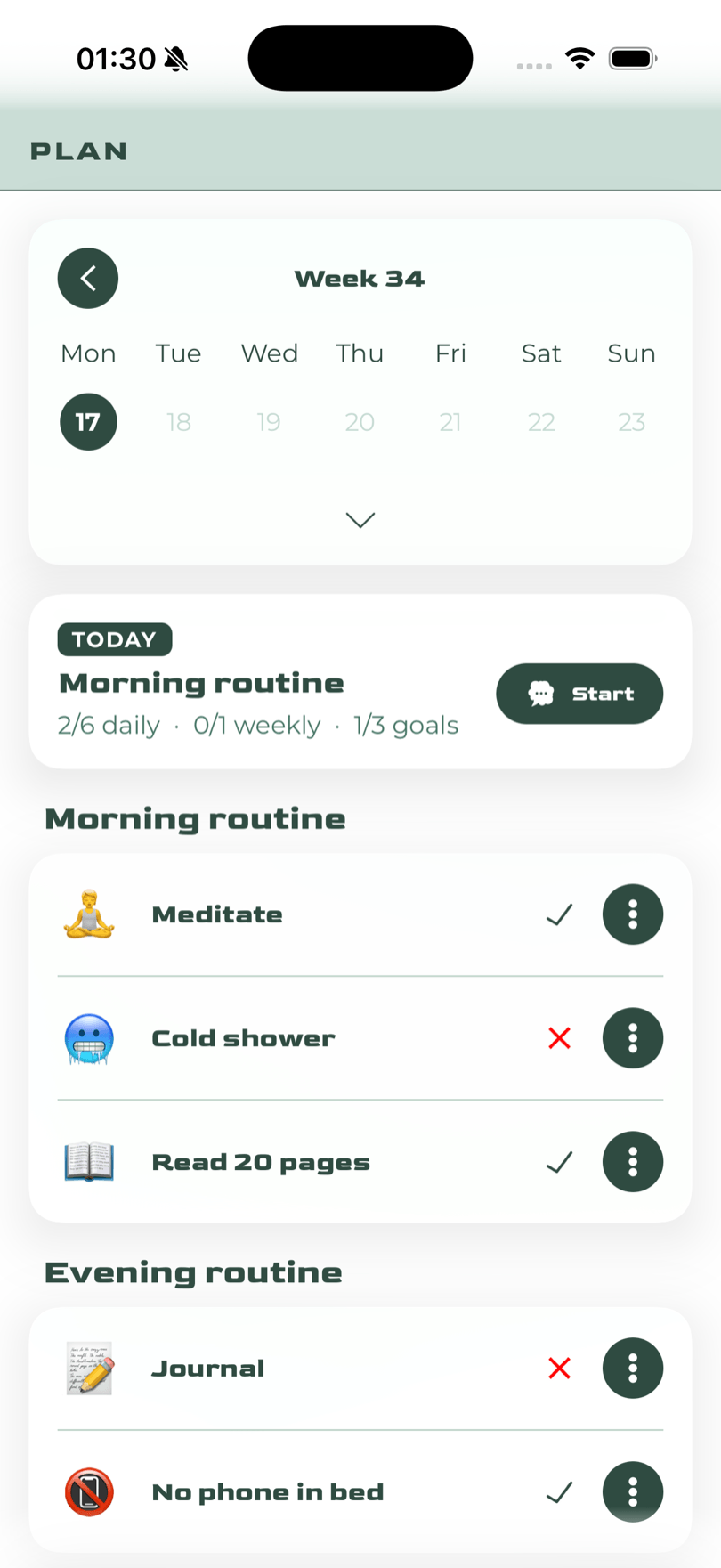
Track every session. Without tracking, your brain forgets what you did, and "I lifted some weights" turns into "I might have lifted some weights" turns into "I did not really lift this week, did I?" Tracking creates the receipt. The receipt creates the streak.
Build identity, not motivation. Motivation is a feeling and it disappears. Identity is a label you assign yourself. "I am someone who trains 3 times a week" is durable. "I feel like training today" is not.
The lifters with the best physiques you have ever seen are not the ones who train the hardest. They are the ones who have trained for 8, 12, 20 years without long gaps. Their workouts look normal. Their nutrition is unremarkable. The only thing that separates them from you is time on task.
Year one of lifting is the most growth you will ever experience. Year three is when the people who started with you have already quit. Year five is when the rest of the world catches on that you "got into great shape." None of those years happen without consistency.


 iOS
iOS Android