Body Recomposition: How to Build Muscle and Lose Fat at the Same Time

2026-05-066 min read

Written by Hamza J

Body Recomposition: How to Build Muscle and Lose Fat at the Same Time

You do not always have to choose between bulking and cutting. Under the right conditions, your body can do both.

Body recomposition means gaining muscle while losing fat simultaneously. It sounds too good to be true, and for some people it is. But for a specific group of lifters, recomp is not only possible, it is the optimal approach.


Who Can Actually Recomp

Body recomposition works for three groups of people:

Beginners. If you have never trained seriously with weights, your body is primed for rapid change. Muscle protein synthesis is highly sensitive to new stimulus. Even in a slight caloric deficit, beginners can build significant muscle in their first 6-12 months.

Overweight individuals. If you carry excess body fat (above 20% for men, above 30% for women), your body has a large energy reserve it can tap into. You can fuel muscle growth from stored fat while eating at a deficit.

Returning lifters. If you trained seriously in the past but took months or years off, muscle memory is real. Your muscle nuclei remain even after atrophy, and regaining lost muscle happens faster than building new muscle. You can cut fat and rebuild simultaneously.

If you are already lean (under 15% body fat for men) and have trained consistently for 2+ years, recomp becomes extremely slow. At that point, dedicated bulk and cut cycles are more efficient.


How to Set Up Your Nutrition

The nutrition setup for recomp is different from a traditional cut or bulk:

FactorRecomp Setup
CaloriesMaintenance or slight deficit (-200 to -300 cal)
Protein1.6-2.2g per kg bodyweight
Training daysEat at maintenance or slight surplus
Rest daysEat at a slight deficit

Protein is non-negotiable. At 1.6-2.2g per kg of bodyweight, you provide your muscles with enough amino acids to build new tissue even while your overall energy balance is neutral or slightly negative. Going below 1.6g/kg significantly reduces your ability to recomp.

Calorie cycling (eating slightly more on training days, slightly less on rest days) is optional but effective. It directs nutrients toward recovery and growth when your body needs them most.


How to Train for Recomp

Train like you are bulking. This is the single most important rule.

Your training should include:

  1. Progressive overload. Add weight, reps, or sets over time. If your training is not getting harder, you are not building muscle.
  2. High volume. Aim for 10-20 sets per muscle group per week. More stimulus means more growth signal.
  3. Compound lifts as your foundation. Squats, deadlifts, bench press, rows, overhead press. These recruit the most muscle mass per movement.
  4. Train close to failure. Keep 1-3 reps in reserve (RIR) on most sets. You need sufficient intensity to trigger adaptation.

Do not make the mistake of training light because you are not in a surplus. Your muscles do not know your caloric intake. They respond to mechanical tension. Train hard.


Why Recomp Takes Longer (and Why That Is Fine)

A dedicated bulk builds muscle faster. A dedicated cut strips fat faster. Recomp does both at a moderate pace.

ApproachTimeline for visible change
Bulk then cut3-4 months per phase
Body recomp6-12 months

The tradeoff is sustainability. Many people who bulk and cut end up overshooting in both directions: gaining too much fat on the bulk, losing too much muscle on the cut. Recomp avoids these extremes entirely.

For beginners especially, 6-12 months of recomp can produce a dramatic transformation without ever feeling like you are dieting or force-feeding.


Track the Right Things

The scale is almost useless during a recomp. You might gain 3 kg of muscle and lose 3 kg of fat and weigh exactly the same. That is a massive change in body composition that the scale completely misses.

Track these instead:

  • Progress photos. Take them monthly in the same lighting and pose. Visual change is the most honest metric.
  • Body measurements. Waist circumference going down while chest and arm measurements go up is the clearest sign of recomp.
  • Strength numbers. If your lifts are going up, you are building muscle. Period.
  • How clothes fit. Pants looser at the waist, shirts tighter at the shoulders. This is recomp working.

Weigh yourself if you want, but only to confirm you are not accidentally in too deep a deficit or surplus. The number itself is not your goal.


Frequently Asked Questions (FAQ)

How long does body recomposition take?
Expect 6-12 months for visible results. Beginners and overweight individuals see faster changes. The process is slower than a dedicated bulk/cut cycle, but it is more sustainable and avoids the yo-yo effect.
Can advanced lifters do body recomp?
Technically yes, but the rate of change is extremely slow. If you are lean and have trained for 3+ years, dedicated bulk and cut cycles will produce results faster. Recomp works best for beginners, overweight lifters, and those returning after a break.
Do I need to count calories for recomp?
It helps significantly. Since recomp requires eating at or near maintenance, being off by 500 calories in either direction can turn your recomp into an accidental bulk or an aggressive cut. Track for at least the first few months until you learn your portions.
Should I do cardio during a recomp?
Moderate cardio (2-3 sessions per week of 20-30 minutes) supports fat loss and cardiovascular health without interfering with muscle growth. Avoid excessive cardio that creates too large a deficit. Walking is the safest option.
How much protein do I really need?
1.6-2.2g per kg of bodyweight. This range is supported by research and gives your body enough amino acids to build muscle even when total calories are at or below maintenance. Going higher than 2.2g/kg has no additional benefit for most people.
What if the scale is not moving at all?
That might be exactly what should happen. If your measurements are changing (waist shrinking, arms growing) and your lifts are increasing, recomp is working. The scale staying flat while your body composition improves is the entire point.

Watch the Video Guide

Quick visual breakdown of this topic.

Body Recomposition: How to Build Muscle and Lose Fat at the Same Time video thumbnail
Open Video Page

Related Program Guides

Track Your Progress

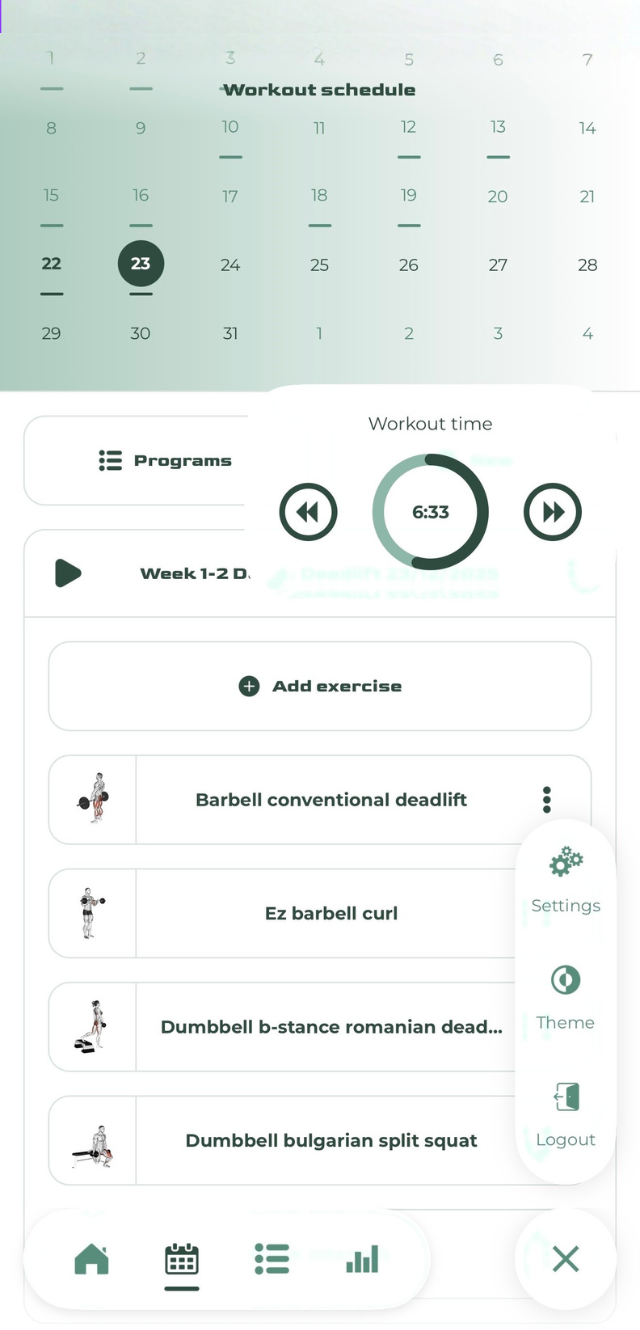
Log every set, track your lifts, and see your progress over time. Free on iOS & Android.

Virtus Athlete

The workout app that puts YOU in control of your strength and fitness journey

Follow us

Get the App

Available on iOS and Android for free.

© 2026 Verum Services. All rights reserved.

Virtus Athlete is a training tool, not a medical device nor a substitute for professional guidance. Train responsibly, do your own research, and consult a qualified fitness professional if needed.